
Why Nothing Ever Feels Good Enough
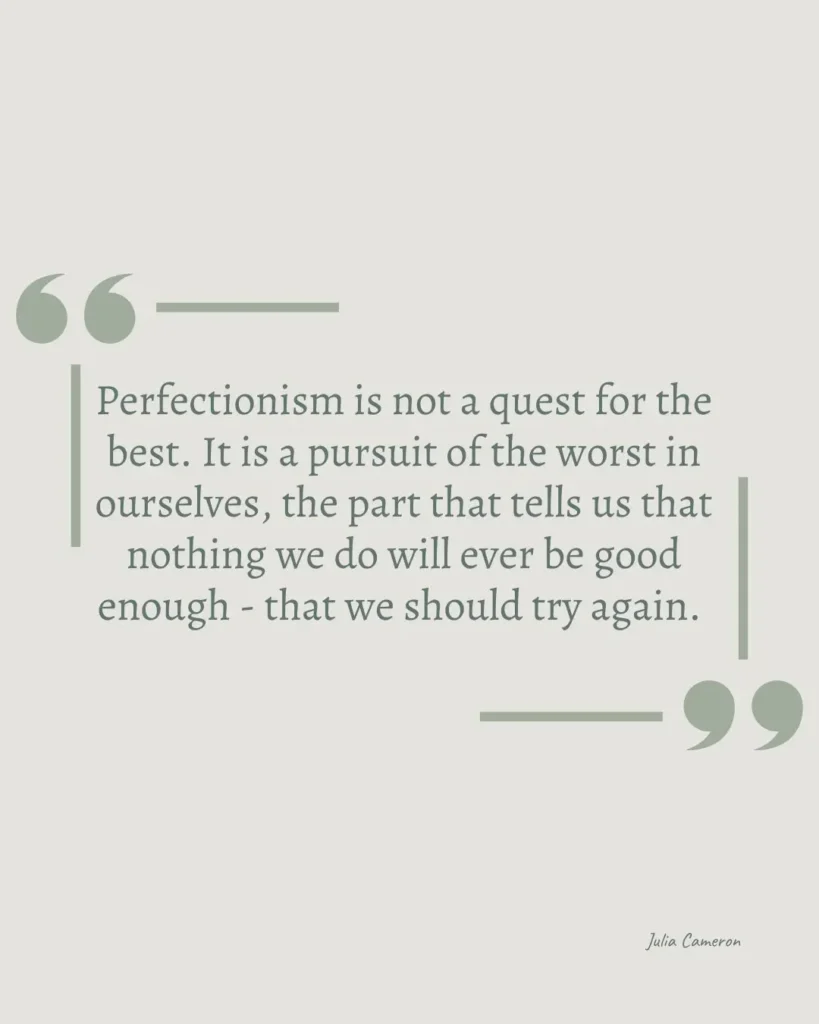
Perfectionism isn’t about having high standards. It’s often driven by the fear of getting things wrong, letting people down or believing your worth depends on what you achieve.
If you’ve ever felt like nothing you do is quite enough, you’re not alone. Understanding perfectionism is often the first step towards loosening its grip.
A chance to ask questions, see whether we’re a good fit, and decide whether you’d like to work together.
What Is Perfectionism?
Perfectionism is the belief that mistakes are unacceptable and that you always need to do more, be more or achieve more before you can feel good enough.
People often think perfectionists are organised, successful and driven.
Sometimes they are.
But behind the scenes, perfectionism often looks very different.
It can mean endlessly checking your work, putting things off because they won’t be perfect, replaying conversations in your head or constantly raising the bar every time you achieve something.
Whatever you accomplish, it rarely feels like enough for very long.
You don’t have to stop caring about doing a good job. This is about understanding the pressure you live under, not lowering your standards.
Why does perfectionism develop?
Perfectionism doesn’t usually appear out of nowhere.
For many people it develops over years of trying to stay safe, gain approval or avoid criticism.
Perhaps you learned that mistakes weren’t welcome. Maybe praise came when you achieved, helped other people or appeared to cope.
Over time, it can become easy to believe your value depends on what you do rather than who you are.
Perfectionism often begins as a way of protecting ourselves, even if it eventually leaves us feeling exhausted.
If this sounds familiar, there’s nothing wrong with you. Your mind has been trying to protect you in the best way it knows how.
Signs perfectionism might be affecting you
Perfectionism isn’t always obvious.
You might notice that you: >>>
People might assume they’re simply lazy or disorganised when the opposite is true. The pressure to get everything exactly right can make even small tasks feel overwhelming.
Perfectionism isn’t always obvious.
You might notice that you:
- put things off because you’re worried they won’t be good enough
- spend far longer on tasks than other people
- find it difficult to celebrate achievements
- constantly compare yourself with others
- feel anxious about making mistakes
- struggle to switch off because there’s always something else to improve
- feel guilty when you rest
People might assume they’re simply lazy or disorganised when the opposite is true. The pressure to get everything exactly right can make even small tasks feel overwhelming.
You don’t have to recognise every sign for perfectionism to be having an impact.
put things off because you're worried they won't be good enough
spend far longer on tasks than other people
find it difficult to celebrate achievements
feel anxious about making mistakes
struggle to switch off because there's always something else to improve
feel guilty when you rest
What Perfectionism might lead to
Perfectionism doesn’t just affect how you think about your work or achievements. Over time, it can begin to affect many areas of your life and wellbeing.
Anxiety
When every decision feels like it has to be perfect, it’s easy to become trapped in worry, overthinking and second-guessing yourself. You may spend hours replaying conversations, checking your work or imagining everything that could go wrong.
If this sounds familiar, you can read more about Counselling for Anxiety here.
Burnout
Living under constant pressure is exhausting. When you rarely allow yourself to rest because there’s always something else to improve, burnout can creep up before you even realise it.
You can learn more about Burnout Counselling here.
Low Self-Esteem
Perfectionism often convinces you that your worth depends on what you achieve. Even when things go well, the feeling of being “good enough” never seems to last for long, leaving your confidence dependent on your next success.
Find out more about Low Self-Esteem here.
Difficulty Setting Boundaries
When you feel responsible for getting everything right or keeping everyone happy, saying no can feel uncomfortable or even selfish. This can lead to taking on too much, people-pleasing and putting your own needs last.
If this resonates with you, you might find this article about boundaries helpful.
What Can Help With Perfectionism?
Perfectionism does not usually soften through harsh self-talk.
Telling yourself to “just stop overthinking” or “just relax” often adds another impossible demand.
A gentler starting point is noticing the pattern with curiosity.
You might ask:
What am I afraid would happen if this was only good enough?
What does a mistake feel like it would mean about me?
Am I trying to avoid criticism, disappointment, conflict, or shame?
Is this task asking for excellence, or am I asking for perfection?
What would be enough for this situation?
What would I say to someone I cared about if they felt this way?
It can also help to practise small moments of “good enough” in lower-pressure situations.
That might mean sending a message without rewriting it five times. Stopping a task when it meets the need. Letting yourself rest before everything is finished. Making a decision without researching every possible option.
These steps may feel uncomfortable at first. That does not mean you are doing them wrong. It may mean your nervous system is learning that imperfection can be safe.
Lasting change rarely comes from trying harder. It begins with treating yourself with the same patience and understanding you would offer someone else.
Breaking the perfectionism cycle
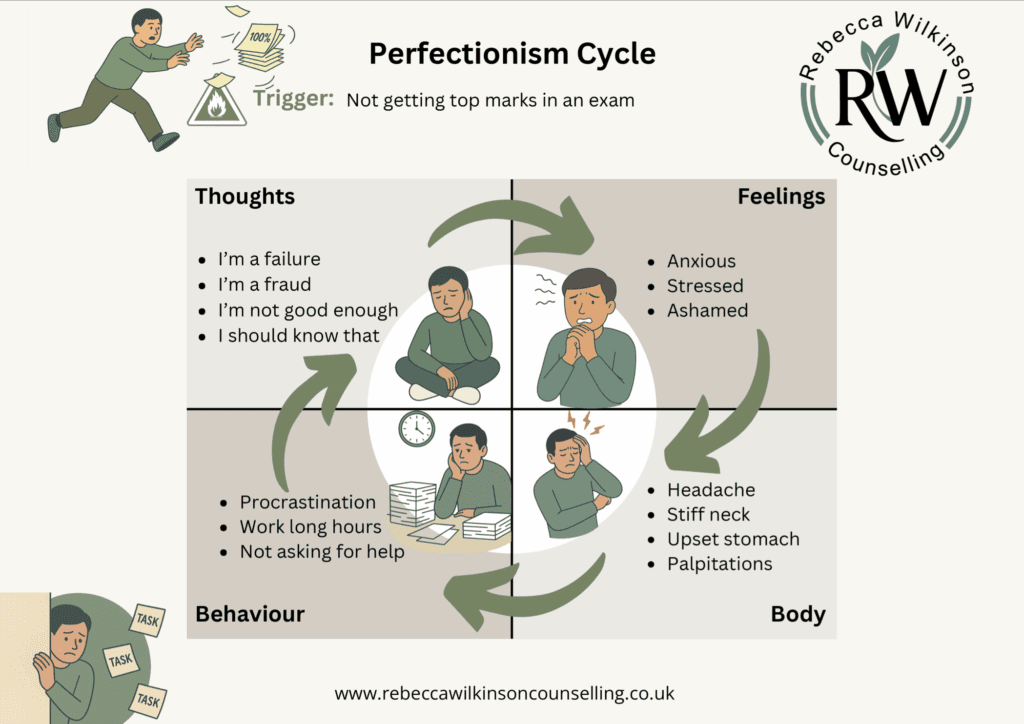
One of the hardest parts of perfectionism is that it rarely feels rewarding.
You work incredibly hard, achieve the goal, experience relief for a moment, and then your mind quickly moves the goalposts.
Instead of enjoying what you’ve accomplished, you’re already thinking about what you should have done better.
Learning to notice this cycle is often the beginning of changing it.
If you’d like to understand it visually, take a look at the Perfectionism Cycle.
Change doesn’t happen by forcing yourself to stop being a perfectionist. It usually begins with a little more awareness and a little less self-criticism.
When Perfectionism Starts To Feel Too Heavy
Perfectionism can be lonely, especially when other people only see the capable version of you.
They may not see the overthinking, self-criticism, guilt, pressure, exhaustion, or fear of getting it wrong.
If perfectionism is affecting your wellbeing, relationships, work, rest, or sense of self, you do not have to wait until you completely burn out before seeking support.
Counselling can offer a steady space to explore where these patterns came from, how they affect you now, and what a kinder relationship with yourself might look like.
The aim is not to stop caring. It is not to become careless or lower your standards until nothing matters.
It is to create more flexibility, more self-compassion, and more room to be human.
There’s no pressure to continue. Just a conversation.