
Challenging unhelpful thoughts
The Court Case Worksheet
When a thought feels completely true, it can be hard to imagine there might be another way of looking at it.
The Court Case worksheet is a simple exercise that helps you slow down, step back from a difficult thought, and look at it with curiosity instead of immediately accepting it as fact.
It won’t make difficult feelings disappear, but it can help create a little more space between you and the thoughts that are causing distress.
A chance to ask questions, see whether we’re a good fit, and decide whether you’d like to work together.
What is the Court Case exercise?
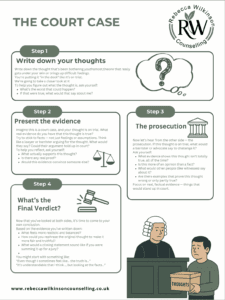
The Court Case exercise invites you to imagine your thought is being examined in court. Instead of treating it as a fact, you become the jury.
You look at the evidence supporting the thought, the evidence against it, and whether there is another explanation that fits the facts just as well.
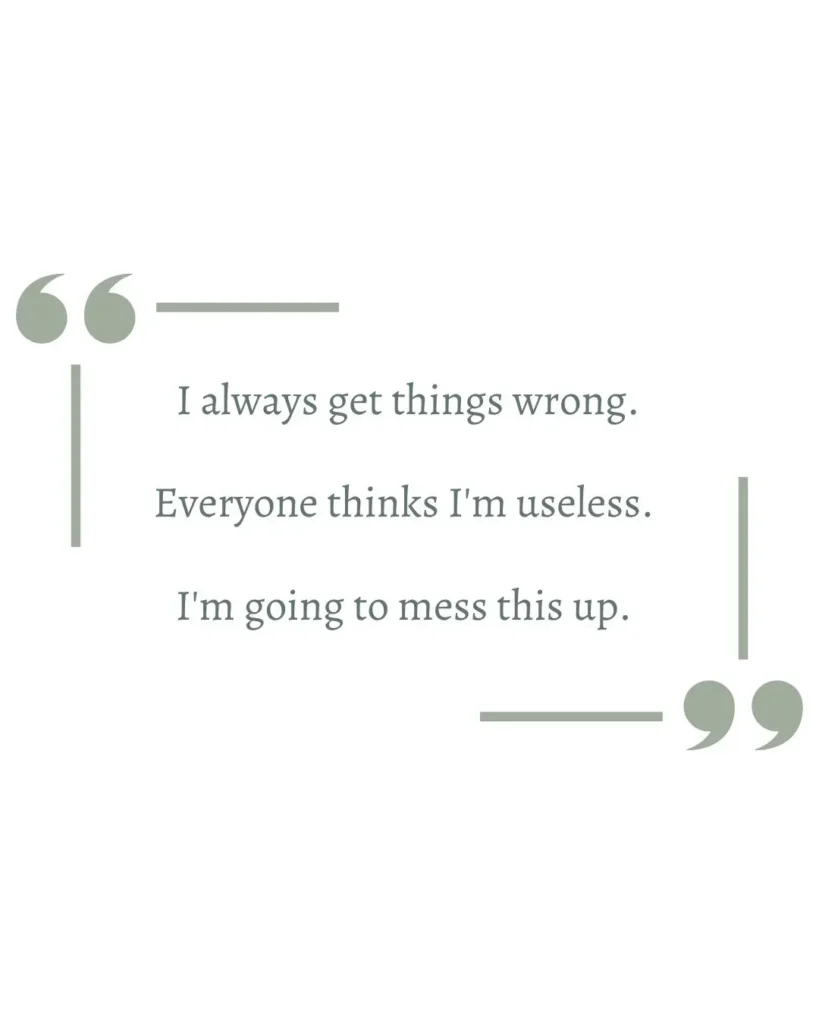
Many of us unknowingly treat our thoughts as absolute truths.
When you’re anxious, overwhelmed or feeling low, these thoughts can seem impossible to question. This exercise helps you gently investigate them rather than automatically believing them.
You don’t have to prove yourself wrong. The aim is simply to become a little more curious about what your mind is telling you.
Why can this be helpful?
Our brains are very good at spotting danger.
Sometimes they also spot danger where there isn’t any.
When you’re stressed, your mind may fill in gaps, assume the worst, or focus only on the evidence that supports your fears.
The Court Case worksheet encourages you to pause before accepting those conclusions.
Over time, practising this can help you:
notice patterns of self-criticism
reduce overthinking
recognise when anxiety is influencing your thinking
respond with greater balance and self-compassion
feel less controlled by automatic thoughts
If anxious thoughts are something you struggle with regularly, you may also find Counselling for Anxiety helpful.
When this worksheet might not help
There are times when trying to analyse a thought isn’t what you need.
If you’re feeling overwhelmed, grieving, panicking or emotionally flooded, your nervous system may need calming before your mind is ready to question anything.
That’s completely normal.
Sometimes it helps to begin with grounding or simply allowing yourself to feel what you’re feeling before trying to examine your thoughts.
If overthinking is something you experience a lot, Online Counselling or in-person counselling can offer a space to explore where those thoughts come from, rather than only managing them.
Be gentle with yourself. Sometimes the kindest thing you can do is meet yourself where you are, rather than expecting yourself to think differently straight away.
Download the worksheet
Use this worksheet whenever a thought feels particularly loud or convincing.
There’s no need to complete it perfectly. Even asking yourself one or two of the questions can begin to loosen the grip of an unhelpful thought.
Download the worksheet below and work through it at your own pace.
There are no right or wrong answers. This is simply an opportunity to slow down and look at your thoughts with a little more compassion.
Looking for more support?
Worksheets can be a helpful place to begin, but sometimes they also highlight patterns that feel difficult to untangle on your own.
If you find yourself caught in cycles of anxiety, self-doubt or constant overthinking, counselling offers somewhere to slow everything down and make sense of what’s happening beneath the thoughts.
You might also find these resources helpful:
You don’t have to untangle everything on your own. Sometimes having someone alongside you can make it feel a little less overwhelming.
