
Understanding Imposter Syndrome
A gentle counselling resource for anyone who feels like a fraud, even when they’re capable and deserving.

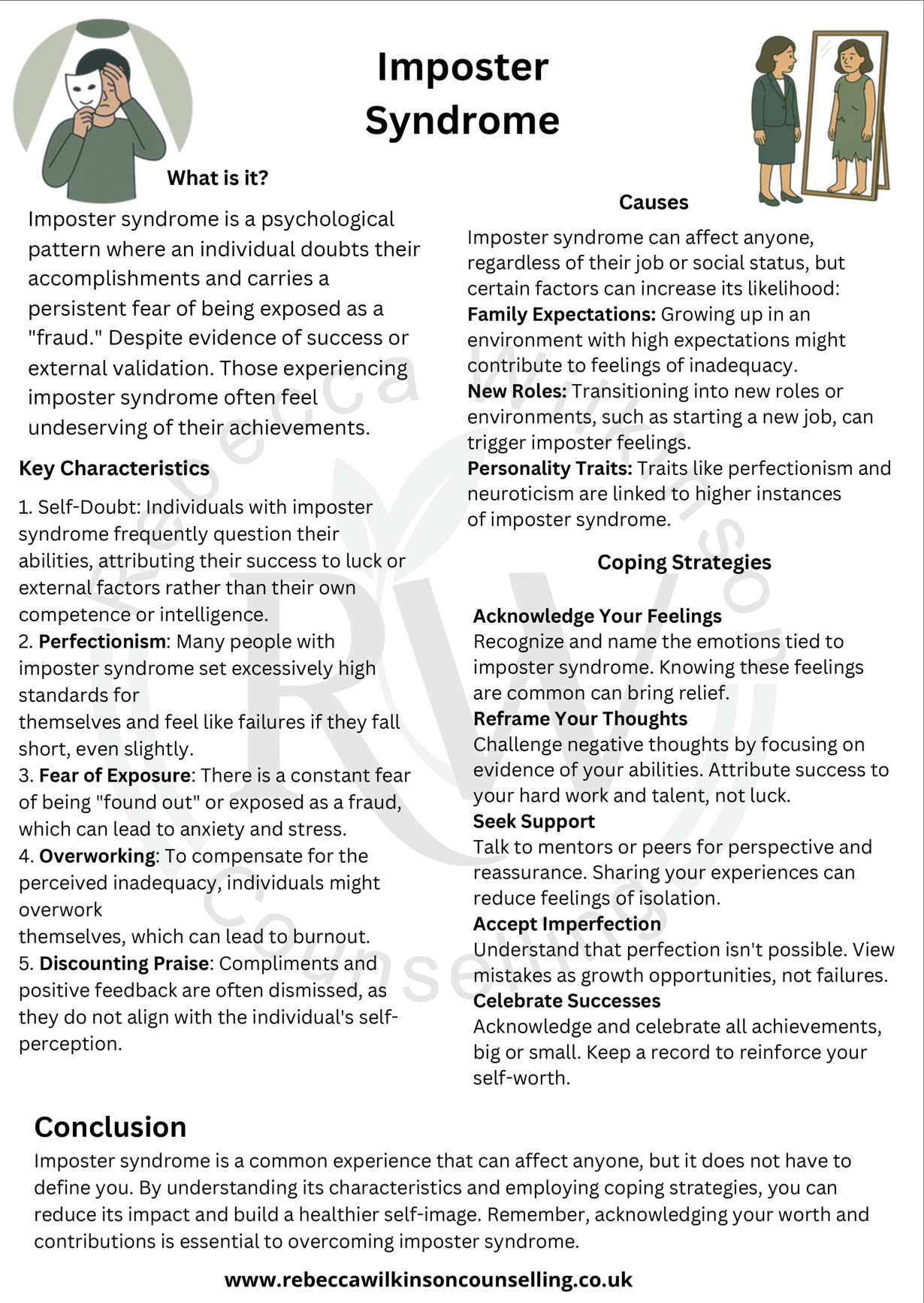
Imposter syndrome describes the experience of feeling like you’re “pretending” to be competent, even when there is clear evidence of your skills, achievements, and capability. Many people experience this quietly — often those who are thoughtful, sensitive, high‑achieving, or navigating big transitions.
This printable resource offers a gentle introduction to imposter syndrome, exploring where these feelings come from and how they can affect confidence, relationships, and emotional wellbeing. You can use it alongside journalling, bring it into counselling sessions, or simply keep it as a reminder that you’re not alone in these thoughts.

What you’ll find inside
- A clear explanation of imposter syndrome and how it can show up
- Common internal messages and self‑talk patterns
- Gentle grounding ideas for moments of self‑doubt
- Suggestions for reframing unhelpful thoughts and building confidence
Many people seek counselling because they feel undeserving, not good enough, or worried they’ll be “found out.” These feelings can appear in work, parenting, relationships, creative projects, or any area where expectations feel high. Understanding imposter syndrome can help you recognise these patterns with more compassion and less self‑criticism.
Whether you’re exploring counselling in Plymouth, accessing counselling online, or simply learning more about yourself, this resource offers a calm starting point for reflection. It’s suitable for students, professionals, parents, and anyone navigating self‑doubt or perfectionism. If you’d like a deeper look at how imposter syndrome shows up in everyday life, you can read my imposter syndrome counselling guide.
Imposter syndrome can influence emotional wellbeing, decision‑making, and how we relate to others. By noticing your inner critic and responding with curiosity rather than pressure, you can begin to build confidence from the inside out.
If you’d like to read more about imposter syndrome, this Psychology Today overview offers a helpful introduction.
Who this resource is for
This sheet is for anyone who struggles with feeling like a fraud, even when they’re capable and accomplished. It may be especially helpful if you’re navigating change, managing perfectionism, or carrying high expectations — whether from yourself or others.
Use it for insight, journalling, conversation, or simply as a gentle reminder that these feelings are more common than they seem, and that you don’t have to face them alone.