
Why Do I Overthink Everything?
Overthinking can make even small things feel heavy.
A short message. A look on someone’s face. A decision about what to say. A conversation from three days ago that keeps replaying when you are trying to sleep.
You might know, logically, that thinking about it again will not change anything. You may even be tired of your own mind by the time the loop begins. But still, it pulls you back in.
Overthinking is not just “thinking too much.” Often, it is an attempt to feel safer. Your mind is trying to prepare, prevent mistakes, avoid rejection, keep people happy, or find certainty where there may not be any.
That does not mean it feels helpful.
It can leave you drained, tense, distracted, irritable, and unable to rest properly.
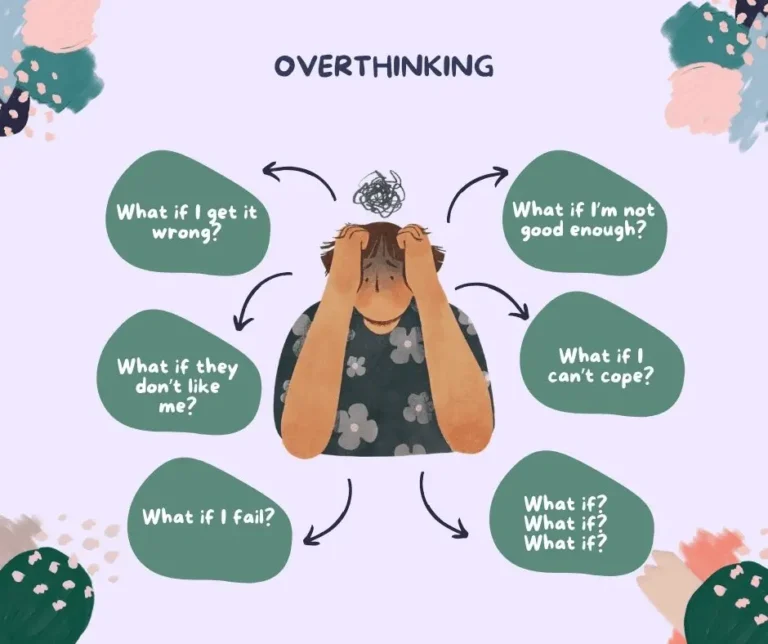
Overthinking is not the same as overreacting
Overthinking is not always obvious.
From the outside, you may look thoughtful, organised, careful, or capable. You might be the person who remembers details, thinks ahead, notices changes in tone, or tries to make sure everyone else is okay.
Inside, it can feel very different.
You might replay conversations afterwards and wonder whether you sounded rude, needy, awkward or too much. You might write and rewrite a message because the wording does not feel quite right. You might struggle to make decisions because every option opens up another set of worries.
Sometimes the thing you are thinking about is important. Sometimes it is tiny. Either way, the feeling can be the same: your mind will not let it go.
That can become exhausting.
Why your mind might keep replaying things
Overthinking often has a job.
It might be trying to protect you from getting something wrong. It might be trying to help you avoid conflict. It might be trying to stop you from being judged, rejected, misunderstood, or caught unprepared.
If you have had experiences where mistakes were criticised, feelings were dismissed, or other people’s moods felt unpredictable, it makes sense that your mind learned to scan for danger.
You might not be overthinking because you are dramatic.
You might be overthinking because some part of you is trying very hard not to be hurt, blamed, embarrassed, abandoned, or caught out.
That does not make the loop pleasant. It just means there may be a reason it started.

Overthinking and anxiety
Overthinking and anxiety often feed each other.
Anxiety says, “What if something goes wrong?” Overthinking tries to answer every possible version of that question. For a while, it can feel productive. You are analysing. Preparing. Working it out.
But the more you think, the more there is to think about.
You may find yourself trying to reach a perfect answer before you act. The perfect reply. The perfect decision. The perfect explanation. The perfect way to make sure nobody is upset.
The problem is that anxiety rarely accepts one clear answer and then quietly leaves the room.
It often asks for more.
If this is part of a wider pattern of worry, tension or feeling unable to switch off, you may find it helpful to read about anxiety counselling in Plymouth.
Overthinking and people-pleasing
Overthinking can become especially intense when other people are involved.
You might worry about whether someone is annoyed with you. You might replay what you said and wonder if you sounded selfish. You might feel responsible for keeping the peace, smoothing things over, or making sure nobody feels disappointed.
This is where overthinking can overlap with people-pleasing.
The question underneath may not be, “What do I think?” It may be, “How do I keep this safe?” or “How do I avoid upsetting them?”
That is a lot of pressure to carry inside one conversation, one message, or one small decision.
If you often find yourself managing other people’s reactions, saying yes too quickly, or feeling guilty for having needs, you may want to read more about people-pleasing counselling in Plymouth.
Overthinking and ADHD traits
For some people, overthinking is connected with ADHD traits too.
It might show up as racing thoughts, jumping between possibilities, replaying interactions, struggling to switch off, or feeling suddenly pulled into shame after a small mistake.
You may find your mind moves quickly, but not always in a way that feels useful. One thought links to another, then another, until the original concern has grown branches.
If rejection, criticism or uncertainty feel especially intense, overthinking can become a way of trying to prevent emotional pain before it happens.
This can be tiring. It can also be lonely, especially if other people tell you to “just stop thinking about it” as if that was ever the missing instruction.
If this connects with your experience, you may find my page on ADHD counselling in Plymouth helpful.
When overthinking becomes a way to avoid feeling
Sometimes overthinking looks like problem-solving, but it is really a way of staying slightly above the feeling.
You might analyse why something happened instead of letting yourself feel hurt. You might keep trying to understand someone else’s behaviour because feeling disappointed would be too painful. You might search for the “right” explanation because accepting uncertainty feels too exposed.
This is very human.
Thinking can feel safer than feeling. Thinking gives you something to do. Feelings can seem messier, slower, and harder to control.
But when your mind keeps circling the same thing, it may be worth asking what feeling is sitting underneath the loop.
Hurt. Fear. Anger. Shame. Grief. Loneliness. Resentment. Exhaustion.
The thought may be loud, but it might not be the whole story.
Why reassurance does not always settle it
When you are overthinking, reassurance can feel like the thing you need most.
You might ask someone whether they are annoyed. You might check whether a message sounded okay. You might look for signs that everything is fine.
Sometimes reassurance helps for a while.
Then the doubt comes back.
What if they were just being polite?
What if I sounded needy?
What if I have missed something?
What if this goes wrong later?
This does not mean you are being difficult. It means the worry is asking for certainty, and certainty is often impossible to fully provide.
Reassurance may calm the surface for a moment, but it may not reach the deeper fear. That deeper fear might be about rejection, conflict, failure, loss of control, or not trusting yourself.
What can help when your mind will not switch off
There is no simple trick that makes overthinking disappear.
If there was, you would probably have found it by now.
But there are gentler ways to respond to it.
Notice the loop without attacking yourself.
Instead of “I’m being ridiculous,” try “I’m looping.” That gives you a little distance. It names what is happening without turning it into a character flaw.
Look for the feeling underneath.
If the same thought keeps coming back, there may be a feeling that has not had enough room yet. You do not have to solve the feeling. You can simply notice it.
Let good enough be allowed.
The perfect reply, perfect decision, or perfect explanation may not exist. Sometimes the kindest next step is the one that is clear enough, honest enough, or possible enough.
Ask what the thought is trying to protect you from.
Is it trying to stop you being judged? Rejected? Wrong? Unprepared? Hurt? The thought may be tiring, but it may also be trying to keep you safe.
Give your mind somewhere to land.
Writing a few lines down, speaking the thought out loud, or using a grounding exercise can sometimes help bring the loop out of your head and into the room.
These are not rules. They are places to begin.
When overthinking leaves you exhausted
Overthinking takes energy.
Even if you have not physically done much, your mind may have been working hard all day. Planning, replaying, checking, scanning, preparing, regretting, and trying to stay ahead of every possible problem.
Over time, this can become emotionally exhausting.
You might feel tired but wired. You might struggle to rest. You might snap more easily. You might feel unable to make even small decisions because your mind has already spent itself on too many imagined outcomes.
If overthinking is part of a wider sense of emotional overload, you may also find my page on counselling for overwhelm in Plymouth helpful.
How counselling can help with overthinking
Counselling is not about telling you to stop thinking.
That usually does not work, and it often leaves people feeling more ashamed.
Instead, counselling can help you understand what the overthinking is connected to. We might look at anxiety, self-criticism, people-pleasing, past experiences, ADHD traits, grief, boundaries, or the pressure you place on yourself to get everything right.
Overthinking often softens when it is understood properly.
Not instantly. Not perfectly. But when you begin to see why your mind is working so hard, you may be able to respond to yourself with less blame.
You may also begin to notice what you actually need in the moment, rather than only what the anxious loop is demanding.
Further support
If overthinking is affecting your daily life, relationships, sleep or sense of confidence, You may find these resources helpful:
What are automatic negative thoughts?
A gentle resource for noticing the quick, unhelpful thoughts that can appear before you have had chance to question them.
The Court Case
A worksheet to help you look at a difficult thought more carefully, especially when it feels convincing but may not be the whole truth.
Grounding exercises for anxiety and overwhelm
A simple resource for moments when your mind feels too busy or your body feels on alert.
If you would like to understand what counselling with me is like, you can also read about how I work before getting in touch.