
How ADHD Shapes Grief & Loss
If you have ADHD, grief and loss may feel more intense, unpredictable or long-lasting than you expected. This article explores how ADHD can shape the grieving process and why your experience is valid, even if it looks different from other people’s.
A chance to ask questions, see whether we’re a good fit, and decide whether you’d like to work together.
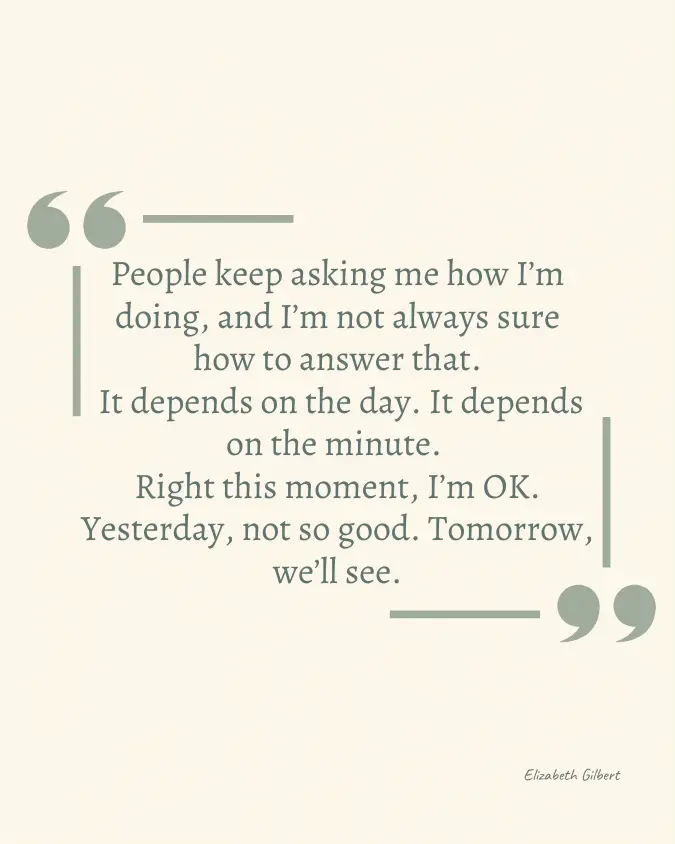
Grief can be confusing
Grief can make ordinary life feel strange.
A message that needs answering can sit there for days. A form can feel impossible. A familiar room can feel too quiet. A small change of plan can tip you into tears, anger, panic, or complete shutdown.
When ADHD is part of the picture, grief can have extra layers. Not because ADHD makes your grief more real, or more dramatic, or more important than anyone else’s. But because the way you process emotion, memory, time, tasks and overwhelm may shape how grief moves through your life.
You may not grieve in the way other people expect. You may not even grieve in the way you expected.
That can be confusing, especially if you are already used to questioning whether your reactions are too much, not enough, or somehow wrong.
There is no right way to grieve. If your grief feels messy, intense, delayed or difficult to explain, that does not make it wrong.
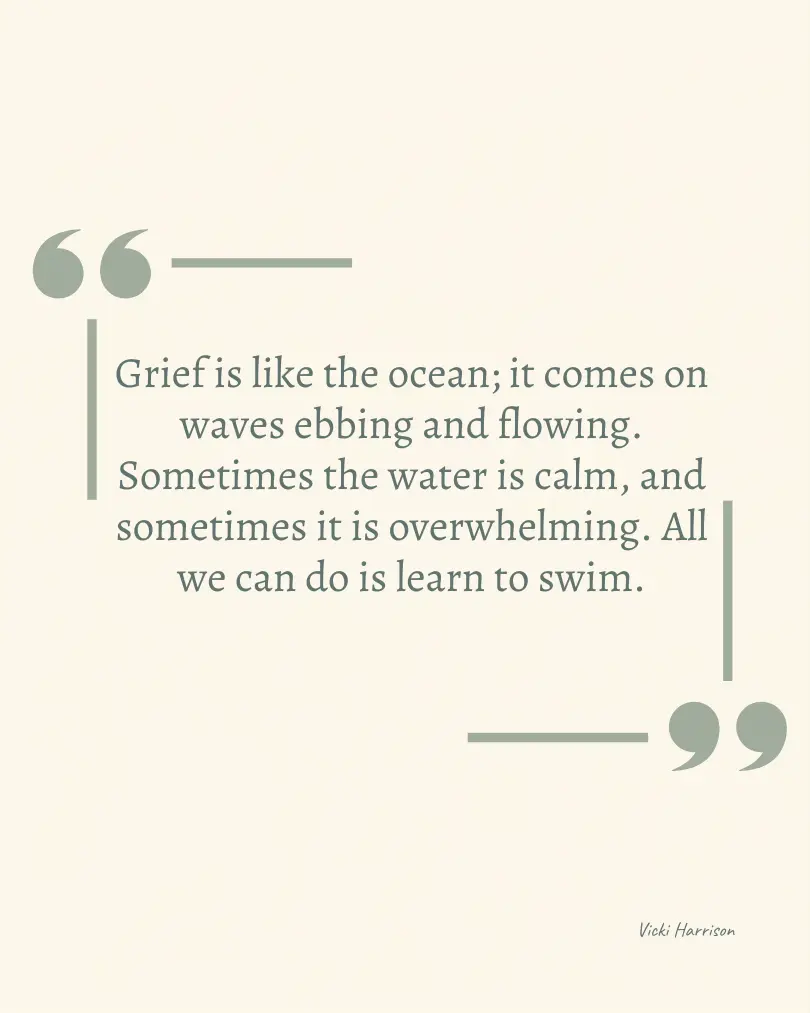
Grief may arrive in waves that feel hard to predict
Grief is rarely tidy for anyone.
With ADHD traits, it can sometimes feel especially sudden. You may be getting through the day, appearing fine, then something catches you. A song. A smell. A photo. A place. A sentence someone says without thinking.
The feeling can arrive before you have had time to prepare for it.
One moment you are doing the weekly shop. The next, you are standing in an aisle trying not to cry because you have seen something they used to buy. Or you feel angry because everyone else seems to be moving normally and you are suddenly back in the rawness of the loss.
This can feel frightening if your emotions often arrive quickly anyway.
You may tell yourself you should have more control by now. You may feel embarrassed by how strongly something hits you. But grief does not always knock politely. Sometimes it walks straight into the room and takes all the air with it.
ADHD can make that emotional shift feel even more intense, especially if you already experience feelings quickly, physically, or all at once.
You don’t have to justify the way grief finds you. Sudden waves of emotion are a normal part of living with loss.
Out of sight does not mean out of heart
There is a painful misunderstanding that can happen around ADHD and grief.
Some people with ADHD traits notice that when they are busy, distracted, or focused on something else, the grief can feel far away. Then it returns suddenly, sometimes with guilt attached.
You might wonder, “How could I forget for a while?”
Or, “What does it say about me that I was okay today?”
Or, “If I really loved them, shouldn’t I be thinking about them all the time?”
This is a cruel place for the mind to go.
Attention is not the same as love. Being distracted for a while does not mean the person mattered less. Having moments where grief is not at the front of your mind does not mean you are cold, detached, or moving on too quickly.
For some ADHD minds, what is not immediately in front of you can feel less present until something brings it sharply back. That can make grief feel like it disappears and returns, rather than staying at one steady level.
The love has not disappeared. Your attention has shifted. Those are not the same thing.
If this kind of recognition feels familiar, you may also want to read more about ADHD counselling in Plymouth.
Love isn’t measured by how often someone is on your mind. The moments you laugh, focus or feel okay don’t erase the love you carry.
Time can feel strange after a loss
After someone dies, time can feel odd for anyone.
Days can blur. Weeks can pass quickly and slowly at the same time. You may know, logically, that the loss happened months ago, but emotionally it may feel very close. Or you might feel strangely disconnected from it, then suddenly realise an anniversary is approaching and your body seems to know before your mind catches up.
ADHD can already make time feel slippery. You may struggle to sense how long things have been, how quickly something is approaching, or how much time has passed since you last spoke to someone.
In grief, this can feel even more unsettling.
You may forget dates and feel awful. You may be caught off guard by birthdays, anniversaries, or reminders. You may feel as if everyone else has moved forward while you are still trying to understand what happened.
None of this means you are grieving badly.
It may mean your sense of time, emotion and memory are not moving in neat order. Grief often refuses a straight line. ADHD can make that line even less visible.
Admin after a death can feel impossible
Bereavement often comes with a brutal amount of practical work.
There may be forms, phone calls, bills, banks, accounts, passwords, belongings, appointments, arrangements, messages and family conversations. At the exact moment your mind is trying to understand a loss, you may also be expected to become suddenly organised.
That can feel unbearable.
For someone with ADHD traits, bereavement admin can hit all the hardest places at once. There are unclear steps, emotional pressure, deadlines, decisions, waiting on hold, remembering details, finding documents and dealing with systems that are not designed for a distressed brain.
You may avoid letters. You may leave emails unopened. You may know something matters and still feel unable to begin.
This is not because you do not care.
Sometimes you care so much that the task becomes harder to touch. A bank form is not just a form. It is proof that the person has gone. A phone call is not just a phone call. It may mean saying the words again to a stranger.
If you already struggle with task paralysis, grief can make the wall between knowing and doing feel much higher.

Grief can make masking harder
A lot of adults with ADHD traits learn to mask.
You might have learned to look organised, sociable, calm, capable, easy-going, or fine, even when things feel very different underneath. You may have spent years trying to make your inner experience more acceptable to other people.
Grief can make that harder to maintain.
You might find you have less energy for small talk. Less patience for pretending. Less ability to manage your face, tone, attention, replies, plans, or other people’s expectations. You may feel blunt, tearful, irritable, distant, or unable to perform the version of yourself people are used to.
That can bring shame.
You might worry you are being rude, selfish, unreliable, too intense, or not supportive enough to others who are grieving too. You may try to mask harder, then crash later.
But grief takes energy. Masking takes energy. Doing both at once can leave very little room for anything else.
Sometimes the kindest question is not “How do I keep acting normal?” but “What am I forcing myself to carry right now?”
Grief doesn’t ask you to perform. If you’re finding it harder to keep masking, it may be because your mind and body need all the energy they have simply to carry your loss.
Emotional intensity can make grief feel frightening
Some people experience grief as a deep ache. Some experience it as numbness. Some feel both at different times.
With ADHD traits, emotions can sometimes feel fast, strong and hard to contain. Grief may bring sudden anger, panic, guilt, despair, irritability, longing or shame. The feeling can seem to take over your whole body.
This can be frightening if you are used to being told you are too sensitive or too reactive.
You may start judging the feeling instead of tending to it. You might tell yourself, “This is too much,” “I should be over this part,” or “I’m making everything worse.”
But emotional intensity is not a character flaw.
It may mean your system is responding strongly to something that matters. It may also mean you need support that understands intensity, rather than support that simply asks you to calm down.
In grief, the aim is not to feel less for the sake of other people’s comfort. It is to have somewhere safe enough for the feeling to exist without swallowing you whole.
If grief is bringing panic, worry or a constant sense of being on edge, it may also help to read about anxiety counselling in Plymouth.
Grief and rejection sensitivity can become tangled
After a loss, people often say awkward things.
Some say too much. Some say nothing at all. Some disappear because they do not know what to do. Some expect you to be okay sooner than you are. Some try to fix your grief with advice that misses the point completely.
If you are already sensitive to rejection, criticism or changes in other people’s tone, this can hurt deeply.
A short reply can feel like abandonment. Someone not checking in can feel like proof that you do not matter. A clumsy comment can stay with you for days. You might replay conversations, wondering whether you were too much, too quiet, too needy, too angry, or not grateful enough for the support you did get.
Grief can make your need for connection feel stronger. ADHD traits can make the uncertainty around connection feel sharper.
That combination can be painful.
It can help to remember that other people’s discomfort with grief is not always a measure of your worth. Sometimes people are limited, awkward, frightened or avoidant. That does not mean your grief is too much.
It means grief has shown you something about where support is steady and where it is not.
Complicated relationships can feel even more complicated
Not every loss is simple.
You might grieve someone you loved deeply. You might grieve someone who hurt you. You might grieve someone you felt responsible for, someone you were angry with, or someone you had been trying to understand for years.
ADHD can add another layer if the relationship already involved criticism, misunderstanding, emotional intensity, conflict, rejection, or feeling like you were always too much or not enough.
After the person dies, your mind may go back over everything.
What if I had said it differently?
What if I had visited more?
What if they never understood me?
What if I never get to explain?
What if I am feeling relieved ?
What if I had just forgiven them?
Those questions can feel very loud.
Grieving a complicated relationship can bring love, anger, guilt, relief, sadness and confusion in the same breath. You do not have to choose one feeling and delete the others.
The relationship does not have to be simple for the grief to be real.
If this connects with what you are carrying, you may find my page on bereavement counselling in Plymouth helpful.
You may need grief support that understands ADHD
Some grief advice is well-meaning but not always helpful.
It may tell you to make a routine, keep on top of tasks, talk when you need to, rest when you can, accept help, and take things one day at a time. None of that is wrong. But it can sound painfully simple when your brain is already overloaded.
If you have ADHD traits, support may need to be more flexible and more realistic.
You may need help breaking down bereavement admin into tiny steps. You may need reminders that forgetting does not mean you do not care. You may need room for emotional intensity without being treated as dramatic. You may need support around guilt, shame, masking, family roles and the pressure to cope in ways that look acceptable from the outside.
You may also need someone to understand that talking about grief will not always be linear.
You might jump between memories, practical worries, anger, numbness, guilt, jokes, silence and sudden tears. That does not mean you are doing counselling wrong. It may simply be how your mind finds its way through something painful.
What can help when ADHD and grief meet
There is no neat method for grieving with ADHD. Grief is not a project to complete.
Still, some gentle adjustments can help.
Make the first step smaller than you think it should be.
If the task is bereavement admin, the first step might not be “sort the paperwork.” It might be “put the letters in one pile” or “open one envelope.” Grief makes tasks heavier. Start where you actually are, not where you think you should be.
Use visible reminders with kindness, not punishment.
If dates, tasks or messages disappear from your mind, external reminders can help. But they need to be there as support, not as evidence against you. A note on the fridge is not proof that you are failing. It is a handrail.
Let emotions move without judging their size.
If grief arrives suddenly, try naming it before arguing with it. “This is grief.” “This is guilt.” “This is anger.” A feeling named gently may still hurt, but it can feel less like an unnamed emergency.
Reduce the amount you are performing.
You may not be able to mask and grieve and manage everyone else’s feelings at the same time. It is okay to reply more slowly, say less, leave early, ask for direct help, or tell someone you do not have capacity.
Be careful with the story shame tells.
Shame often turns ADHD and grief into a character attack. It says you are cold because you got distracted, selfish because you need space, useless because the admin is hard, or too much because your feelings are strong. Shame is loud, but it is not always accurate.
Counselling for ADHD and grief in Plymouth
If ADHD shapes the way you experience grief, you are not doing grief wrong.
You may simply need support that understands both.
Counselling can offer space to talk about the loss itself, and also the way grief is affecting your mind, body, tasks, relationships and sense of self. It can help you untangle guilt, emotional intensity, masking, family roles, bereavement admin and the pressure to cope in a way that looks acceptable to others.
I offer bereavement counselling in Plymouth and ADHD counselling in Plymouth, as well as online counselling for adults across the UK.
You do not need to have a formal ADHD diagnosis to talk about these experiences. You do not need to make your grief tidy before bringing it into the room.
We can start with what feels hardest right now.
There’s no expectation to be anything other than yourself.
Ready to Take the Next Step?
If you’re thinking about counselling, the first step doesn’t have to feel overwhelming. A free introductory call gives us the chance to meet, talk about what you’re looking for, and see whether working together feels right.
There’s no pressure to continue. Just a conversation.
Free Resources
If you’re not quite ready for counselling, or you’d simply like somewhere to begin, I’ve created a collection of free resources to support you.
You’ll find journalling prompts, worksheets and practical guides covering topics such as boundaries, self-worth, grief, people-pleasing, perfectionism and grounding techniques.
You don’t have to do everything at once. Small steps still count.