
What Are ANTs?
A gentle counselling resource to help you recognise and soften automatic negative thoughts.

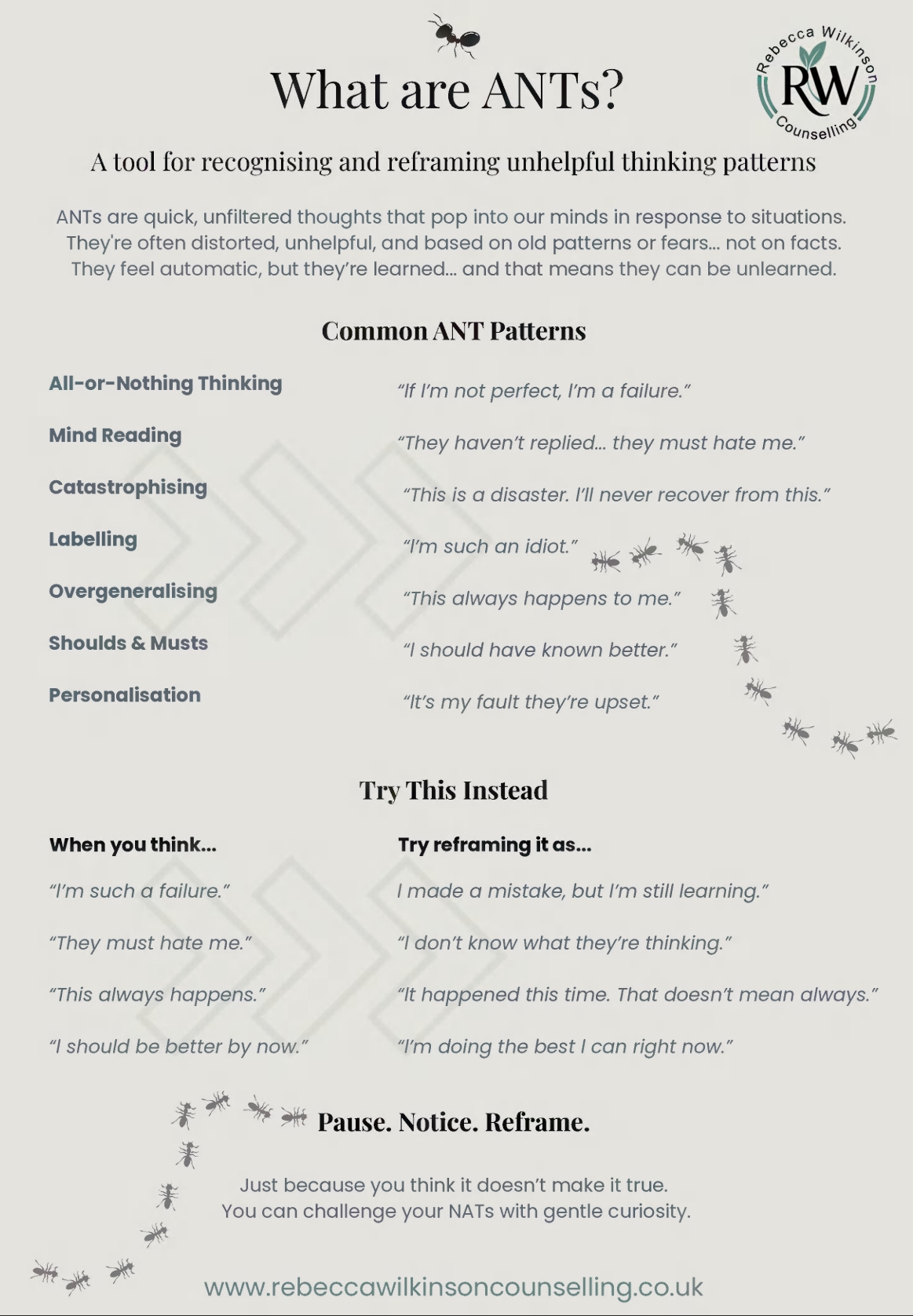
Automatic Negative Thoughts — often called ANTs — are the quick, unhelpful thoughts that pop into our minds without us choosing them. They can influence how we feel, how we behave, and how we see ourselves, especially when they go unnoticed or unchallenged.
This printable resource introduces some of the most common types of ANTs, such as mind‑reading, catastrophising, and should‑statements. It also offers gentle alternatives to help you pause, reflect, and reframe your thinking in a kinder, more balanced way.
Created as part of my counselling work in Plymouth, this resource is one of many tools designed to support emotional wellbeing both in and between sessions.
What you’ll find inside
- A gentle explanation of what automatic negative thoughts are
- Common types of ANTs with examples
- Suggestions for reframing unhelpful thoughts
- Encouragement to pause, notice, and respond with self‑compassion
Why ANTs matter
Thoughts like “I’m a failure” or “They must be annoyed with me” can feel incredibly convincing in the moment — but that doesn’t make them true. ANTs often come from fear, past experiences, or old patterns rather than present‑day reality.
This resource brings together ideas from Cognitive Behavioural Therapy (CBT) in a warm, accessible way. Whether you’re managing anxiety, low self‑esteem, or simply trying to understand yourself better, exploring ANTs can help you slow down and reflect on your inner dialogue.
It’s a supportive tool for anyone accessing counselling in Plymouth, looking for counselling online, or wanting a gentle way to check in with themselves between sessions.
If you’d like to explore unhelpful thinking styles further, this Therapist Aid resource offers a helpful companion overview.

Who this resource is for
This sheet is for anyone who finds themselves caught in loops of self‑criticism, doubt, or overthinking. It can be especially helpful for people navigating anxiety, low confidence, or perfectionism. You can use it for journalling, self‑reflection, or as a conversation starter with your therapist.