
The Perfectionism Cycle
A gentle counselling resource exploring the pressure to achieve and the emotional toll it can take.
Many people come to counselling because they feel stuck in patterns of perfectionism — the sense that you must perform flawlessly to feel worthy, safe, or “enough.” This printable resource offers a calm, visual explanation of how the perfectionism cycle begins, what keeps it going, and how it affects emotional wellbeing.
If you often feel pressure to achieve, worry about making mistakes, or find yourself caught between overworking and procrastinating, this guide may help you understand what’s happening beneath the surface.

What is perfectionism?
Perfectionism is more than having high standards. It’s when your sense of worth becomes tied to how well you perform. This can lead to self‑criticism, fear of failure, and a constant feeling that you should be doing more. Many people describe living with an inner pressure that never fully switches off.
What does the cycle look like?
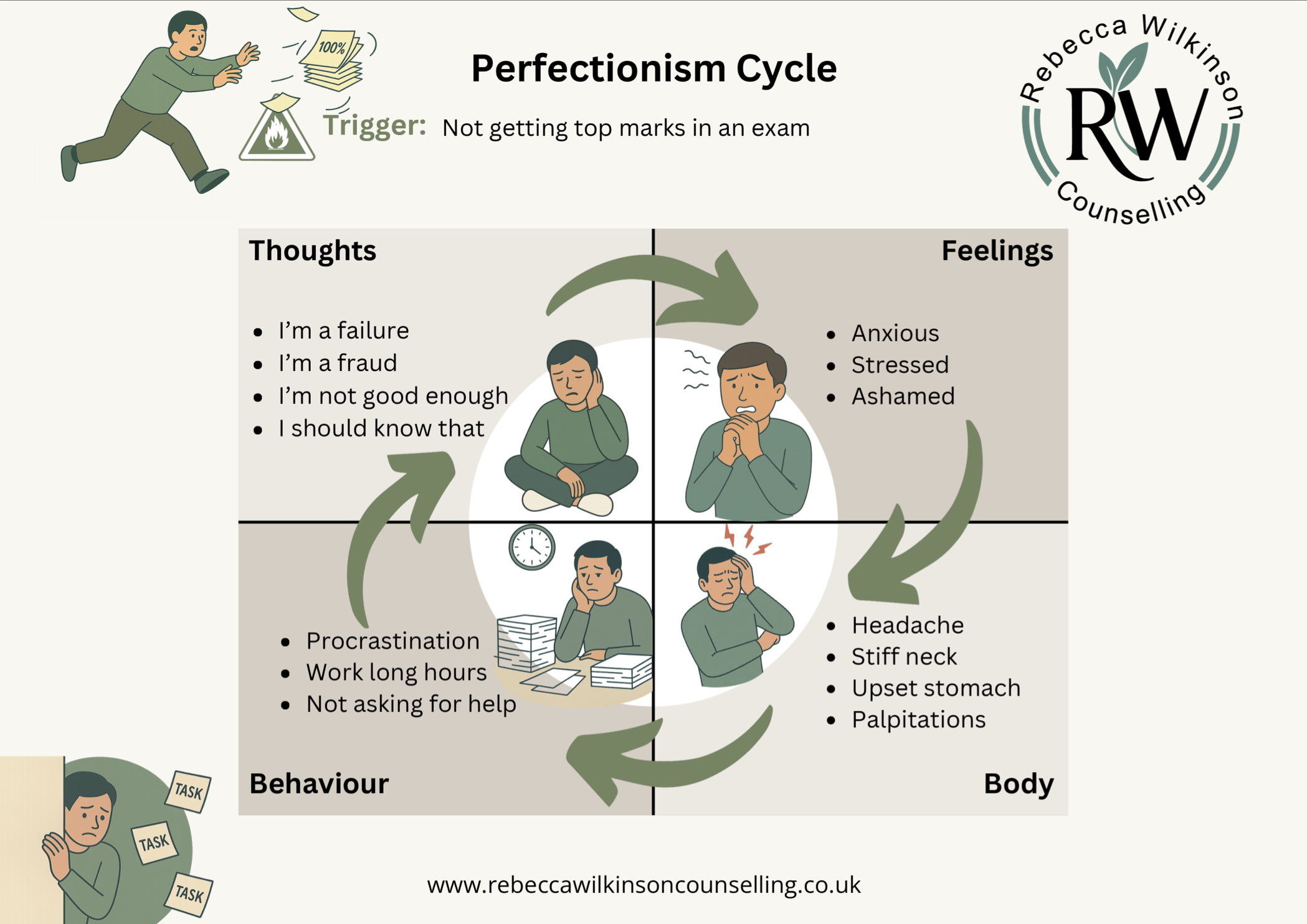
The perfectionism cycle often begins with a trigger — a mistake, a comparison, or a moment where expectations feel high. This can lead to self‑critical thoughts, emotional distress, and physical symptoms such as tension, headaches, or a racing heart.
To cope, people may overwork, avoid tasks, or push themselves harder. These behaviours temporarily reduce anxiety but ultimately reinforce the belief that they must “do better” next time. Over time, this cycle can become exhausting and difficult to break.
Why this cycle matters
Understanding the perfectionism cycle is the first step toward interrupting it. When you can see how your thoughts, feelings, and behaviours connect, it becomes easier to respond with compassion rather than pressure. This resource can support conversations in counselling or offer a gentle starting point for self‑reflection.
How to use this resource
You might use this sheet as a journalling prompt, bring it into a counselling session, or keep it nearby as a reminder to pause when perfectionistic thoughts arise. It pairs well with other free counselling resources on grounding, boundaries, and self‑talk.
Many people exploring counselling in Plymouth or accessing counselling online struggle with perfectionism without realising how deeply it affects their wellbeing. This resource is designed to support emotional awareness, reduce self‑criticism, and encourage kinder internal dialogue.
Perfectionism often develops over years and can be influenced by upbringing, expectations, or past experiences. This guide doesn’t aim to “fix” anything — it simply offers a clearer way to understand what’s happening inside.
If you’d like to learn more about perfectionism, this Psychology Today article offers a helpful overview.
