
Free Grounding Exercise
Grounding techniques are simple, sensory‑based practices that help bring your attention back to the present moment.
This free counselling resource introduces the 5‑4‑3‑2‑1 method — a well‑known grounding exercise used in therapy, mindfulness, and trauma‑informed work.
A chance to ask questions, see whether we’re a good fit, and decide whether you’d like to work together.
What are grounding techniques?
Grounding techniques are simple exercises that help bring your attention back to the present moment when your mind feels overwhelmed. They can be especially helpful if you’re feeling anxious, panicked, disconnected or caught up in racing thoughts.
When we’re under stress, it’s easy to become lost in worries about what might happen next or replay difficult experiences from the past. Grounding techniques gently encourage you to notice what’s happening around you right now, helping you reconnect with your surroundings instead of becoming swept away by anxious thoughts.
Grounding techniques are practical exercises that use your senses, breathing or physical movement to help anchor your attention in the present moment. While they won’t make anxiety disappear, they can help you feel calmer and more in control until the intensity begins to ease.
There are many different grounding techniques, and not every approach works for everyone. Some people find movement helpful, while others prefer focusing on their breathing or using their senses. The 5-4-3-2-1 grounding technique is one of the most widely used because it’s simple, requires no equipment and can be practised almost anywhere.
If anxiety regularly feels overwhelming or grounding techniques aren’t enough on their own, it may be helpful to explore what’s happening beneath the surface. Counselling for anxiety can provide a safe space to understand your experiences and develop strategies that work for you.
Grounding techniques don’t have to be perfect to be helpful. Even if they only reduce the intensity of your anxiety for a few moments, that can be enough to help you regain a sense of control.
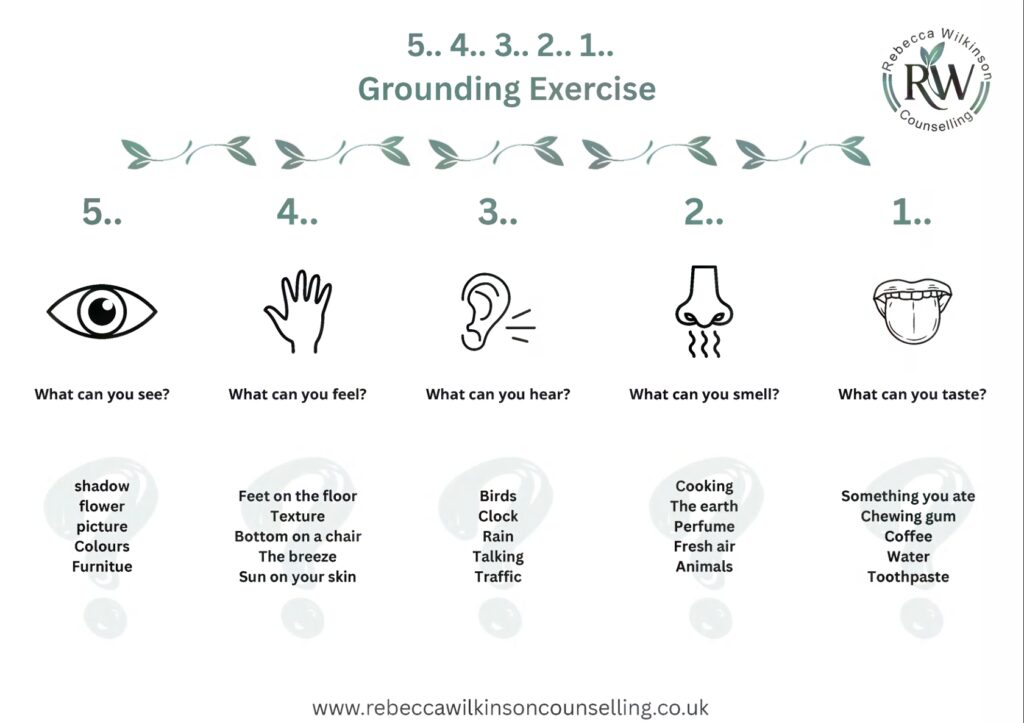
How to Use the 5-4-3-2-1 Grounding Technique
The 5-4-3-2-1 grounding technique is a simple exercise that helps bring your attention back to the present moment by focusing on your senses. You can use it whenever anxiety, overwhelm or racing thoughts begin to take over.
Take a slow breath and, if you can, pause where you are. There’s no need to rush through the steps.
things you can see
Look around you and notice five things you can see. They could be colours, objects, patterns or anything else in your surroundings.
things you can feel
Notice four things you can physically feel, such as your feet on the floor, your clothes against your skin, the chair supporting you or the warmth of the sun.
things you can hear
Listen carefully for three different sounds. They might be close by or further away, obvious or very subtle.
things you can smell
Notice two different smells around you. If you can’t identify any, think of two scents you enjoy or move somewhere with more noticeable smells.
thing you can taste
Focus on one taste. It might be a drink, a mint, chewing gum or simply the taste already in your mouth.
When you’ve finished, take another slow breath and notice whether anything feels different. You don’t need your anxiety to disappear for the exercise to have been helpful. Even feeling a little more present or a little less overwhelmed can be a positive step.
Signs anxiety might be affecting you
Anxiety doesn’t always look the way people expect. It isn’t just panic attacks or constant worry. Sometimes it shows up in quieter ways that gradually begin to affect your daily life. If any of these feel familiar, anxiety may be playing a bigger role than you realise.
You don’t have to recognise every sign for anxiety to be having an impact.
Your mind won't switch off
You feel tense or on edge
You avoid certain situations
You find it difficult to concentrate
Your sleep is affected
Small things feel much bigger than they used to
Looking for more support?
If anxiety is becoming a regular part of your life or you’re finding it difficult to cope, you don’t have to manage it on your own. Alongside practical techniques like grounding, counselling can help you understand what’s contributing to your anxiety and develop ways of responding that feel right for you. If you’d like to learn more, you can read about counselling and how it works on this page How Does Counselling Work?
Or if you would like to talk it through, you are welcome to arrange a free introductory call.
There’s no pressure to continue. Just a conversation.
Free Resources
If you’re not quite ready for counselling, or you’d simply like somewhere to begin, I’ve created a collection of free resources to support you.
You’ll find journalling prompts, worksheets and practical guides covering topics such as boundaries, self-worth, grief, people-pleasing, perfectionism and grounding techniques.
You don’t have to do everything at once. Small steps still count.
What you’ll find in this resource
- A clear explanation of the 5‑4‑3‑2‑1 grounding method
- Examples of what to notice using each of your senses
- A calm, visual layout you can return to during stressful moments
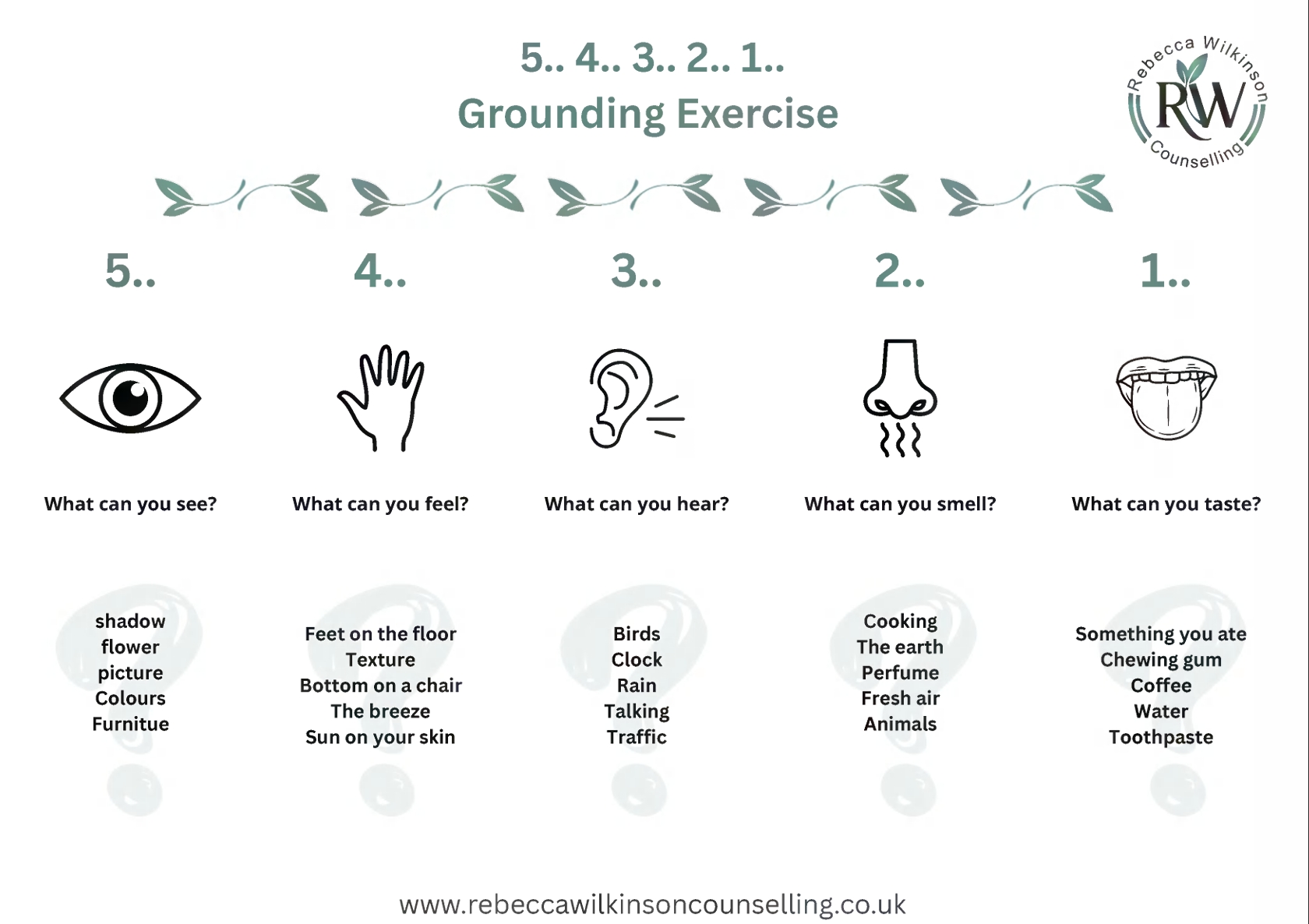
This grounding exercise is something you can return to whenever you need a moment of steadiness. You can use it before a counselling session, after a difficult conversation, or during times of stress. Whether you’re exploring counselling in Plymouth, online counselling, or simply looking for ways to feel calmer and more connected, I hope this resource offers a gentle place to begin.